
Total Recoverable Petroleum Hydrocarbons Testing and Analysis
Phoslab Environmental Testing Services
 Phoslab offers premier environmental laboratory testing services throughout the state of the Florida. Please read on to learn more about one of these featured services:
Total Petroleum Hydrocarbons Testing
Total Recoverable Petroleum Hydrocarbons (TRPH) or simply stated- total petroleum hydrocarbons (TPH)- are hydrocarbons that exist in crude oil, which is used to make petroleum products. TPH is a family containing hundreds of chemical compounds that were originally derived from crude oil so it is often referred to as hydrocarbon oil, mineral oil, and grease.
What are hydrocarbons? In short, they are molecules that include hydrogen and carbon atoms. Hydrocarbon examples in everyday life include paraffin and isopropyl alcohol. Once formed, hydrocarbons combine easily with other atoms to create organic compounds. TPH are mixtures of chemicals that are mainly made from hydrocarbons.
Examples of chemicals found in TRPH include:
- Hexane
- Benzene
- Toluene
- Xylene
- Naphthalene
- Flourene
- Components of gasoline, mineral oils, and other petroleum products
It would be impractical to measure the full scope of TPHs present at a given site, but obtaining a composite amount of TPH found in a sample can help identify the extent of contamination. These hundreds of components can be divided into groups, known as petroleum hydrocarbon fractions, based on how they act in soil and water. These petroleum hydrocarbon fractions allow scientists at Phoslab Environmental Laboratories to measure the concentrations of TPH.
TRPH contamination
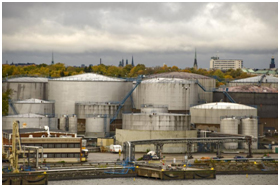 TRPH is released into the environment through accident-prone leakages from industries and as byproducts from commercial or private uses. Total petroleum hydrocarbons in water typically show up in the form of a thin surface film, while heavier fractions might appear as sediment at the bottom of the waterbed. Total petroleum hydrocarbons in soil may become absorbed by groundwater.
Everyone is exposed to some amount of TPH; components are airborne. Prolonged exposure, however, is dangerous and poses a threat of TRHP contamination. Certain occupations such as those involved in extracting and refining crude oil face a more significant risk through inhalation of airborne contaminants and skin contact. Underground contamination such as from a leaking storage tank can expose others through drinking water and contact with ground soil.
To minimize contamination, Phoslab Environmental uses state-of-the-art technology to test a wide variety of samples to accurately measure the TPH concentration in air, water, or soil.
TPH Health Effects
While most people inhale and exhale petroleum hydrocarbons on a daily basis, prolonged exposure can lead to any number of health complications.
Reported TPH health effects include:
- Headaches
- Dizziness
- Peripheral neuropathy
- Irritation of skin and eyes
- Permanent damage to liver, kidneys and lungs
- Complications in pregnancy
The full scope of the health effects surrounding exposure to TPH is not fully understood. Health risks vary depending on the length of the exposure and the toxicity of individual TPH compounds. In some cases, exposure can be deadly.
At Phoslab, we do our part to minimize the health effects of exposure to Total Petroleum Hydrocarbons. To that end, we offer comprehensive testing services. Learn more about our various testing methods below.
Total Petroleum Hydrocarbon analysis
Modern science includes a wide array of testing methods for thorough Total Recoverable Hydrocarbon analysis. Some of our most commonly used methods include:
- Gravimetric – A sample is extracted using an organic solvent and then evaporated to leave the grease residue behind. However, this method only measures heavy hydrocarbon ranges. It does not provide detailed information as to the carbon range.
- Immunoassay – This is a relatively new biochemical test used in field measurements of the concentration of total petroleum hydrocarbons in a solution. However, this method does not give information regarding the carbon range and results are prone to interference.
- Gas Chromatography – The most commonly used analysis in our own TRPH testing lab. Samples are extracted using methods such as tumbling, sonication, or microwave extraction. Extracts are then analyzed using gas chromatography. TPH compounds are detected in the order of boiling point and quantified by comparison to standards.
The results are expressed in relation to hydrocarbon ranges:
- C6-C9
- C10-C15
- C16-C28
Federal and Florida TPH regulation
Given the impact of total recoverable hydrocarbons on the environment, they fall under a handful of federal regulations including:
- Clean Water Act
- National Pollutant Discharge Elimination System, Resource Conservation Recovery Act
- Comprehensive Environmental, Response, Compensation, and Liability Act
To ensure consistency, both the U.S. Environmental Protection Agency (EPA) and the American Society for Testing and Materials (ASTM) have developed guidelines or standards for detecting and handling TPH. In addition, Florida laws set acceptable concentrations of TPH in soil and water and establish acceptable methods of measuring the TPH content.
It goes without saying that a company cannot stay compliant on its own; measuring TPH levels and ensuring compliance with regulations is a specialty that should be placed in the hands of an expert like Phoslab Environmental.
At Phoslab Environmental, we offer a full range of environmental testing services. With our diverse selection of TPH methods, we meet the individual needs of our clients. Feel free to give us a call at (888) 997-3020 or contact us online to learn more about our TRPH testing and analysis services.
Additional TPH Testing Resources:
- About Us, http://phoslab.com/about-us/
- Client Resources, http://phoslab.com/client-resources/
- State of Florida, Florida Residual Petroleum Organic Method (FL-PRO) Petroleum Cleanup Guidance Document #7, http://www.dep.state.fl.us/waste/quick_topics/publications/pss/pcp/site/guidance7.pdf
- CDC Agency for Toxic Substances & Disease Registry, Public Health Statement for Total Petroleum Hydrocarbons, (TPH), http://www.atsdr.cdc.gov/phs/phs.asp?id=422&tid=75
- CDC Agency for Toxic Substances & Disease Registry, Regulations and Advisories for Total Petroleum Hydrocarbons, https://www.atsdr.cdc.gov/toxprofiles/tp123-c7.pdf